Case study · Flagship program
From a bottlenecked live session to my department’s first LMS-based training program.
A 90-minute expert-led live session ran once a month, and everything queued behind it. I redesigned it as a scenario-based, decision-focused LMS course, built and automated inside the institution’s own Brightspace environment.
A multi-site healthcare/research institution in Montreal · September 2025 – present
The institutional course runs in Brightspace. This public demo is a Moodle rebuild of the same design.
Seven chapters, each one locked until the previous chapter’s exam is done. Built in the tools the institution already owned.
Previously, the same content reached learners one monthly session at a time.
learners since September 2025
completion rate as of April 2026
of admin per month, down from several hours of scheduling and coordination
All three figures are from this program: my department’s first LMS-based training program.
The problem
One expert, one session a month, and a queue of people waiting to work.
The workflow is colony management in a research animal facility. The domain is narrow; the design problem is not. Teach people to make correct decisions inside an SOP-governed process, then produce records that prove they can: that is the same problem in a hospital, a biotech QA function, or a public-sector compliance program. Where this maps →
Training for it depended on a single 90-minute live session, delivered by a subject-matter expert, once a month. If you missed it, you waited. Onboarding stalled, scheduling and reminders were handled manually, and the session itself was passive: a large volume of procedural information delivered faster than anyone could absorb it.
The deeper issue was what the format could not do. Attendance was the only evidence of readiness, and recurring operational errors (planning mistakes, incorrect procedural combinations, missed escalation points) kept reaching staff after training. People could describe the rules; they struggled to make the decisions.
A delivery bottleneck
One monthly session gated every new learner’s start date, and the expert’s calendar gated the session.
Passive by design
A dense presentation left no room to practice decisions, check understanding, or surface confusion before real work.
Weak evidence of readiness
Attendance records could not show whether someone could plan correctly, recognize exceptions, or escalate at the right moment.
The constraints
Regulated work, institutional tools, and records that have to hold up.
This was not a blank-slate eLearning project. The workflow sits inside a regulated environment where procedures are governed by SOPs, training records function as controlled documents, and audit-readiness is a standing expectation: the training had to produce defensible evidence of completion, not just a better learner experience.
There was a tooling constraint too. My request for a dedicated authoring-tool license was declined. Rather than let the project stall, I self-trained on Brightspace Creator+ and H5P, worked with the institution’s online-courses department, and built the design inside the tools it already owned.
The constraint became the design brief: build something maintainable, auditable, and owned by the institution, not by a license.
What I built
Applied decision-making over memorization.
The design goal was that learners leave able to ask whether an approach is justified at all, not just how to execute it. Every scenario connects an operational decision to its downstream impact on other teams: what a planning shortcut costs the people who inherit it, and where a wrong combination creates compliance and quality problems later.
Per-chapter exams replaced the single cumulative final, so understanding is confirmed section by section instead of gambled on one attempt at the end. Release conditions enforce the sequence: an exam unlocks only after every page in its chapter has been viewed, and past the introduction, each chapter stays locked until the previous chapter’s exam is done.
The operations around the course run on Brightspace Intelligent Agents. A learner gets a personalized welcome on enrolment, reminders as the deadline approaches, and a certificate of completion the moment they finish. Three more agents report into the team’s shared inbox: one when a learner is at risk of missing the deadline, one when a learner has not started within a set number of days, and one on completion. The final completion check is the only step still done by hand.
- ResearchI attended the live session as a learner, then shadowed a frontline technician for a day to see where the training met, and missed, the real work.
- BuildWith no dedicated authoring-tool license, I self-trained on Brightspace Creator+ and H5P and built the course in the tools the institution already owned. I later rebuilt it in Moodle as the public demo.
- AssessScenario-based activities and per-chapter exams replaced one cumulative final, with release conditions gating each chapter behind the last: evidence of readiness, chapter by chapter.
- AutomateWelcome messages, deadline reminders, at-risk alerts, and certificates all run on Brightspace Intelligent Agents; admin dropped to about 20 minutes a month.
Before / after
The same content, restructured around decisions.
Before: a monthly 90-minute live session, manually scheduled, assessed by one cumulative final. After: a self-paced, scenario-based LMS course with welcome, reminder, at-risk, and certificate workflows running on Brightspace Intelligent Agents, assessed by per-chapter exams.
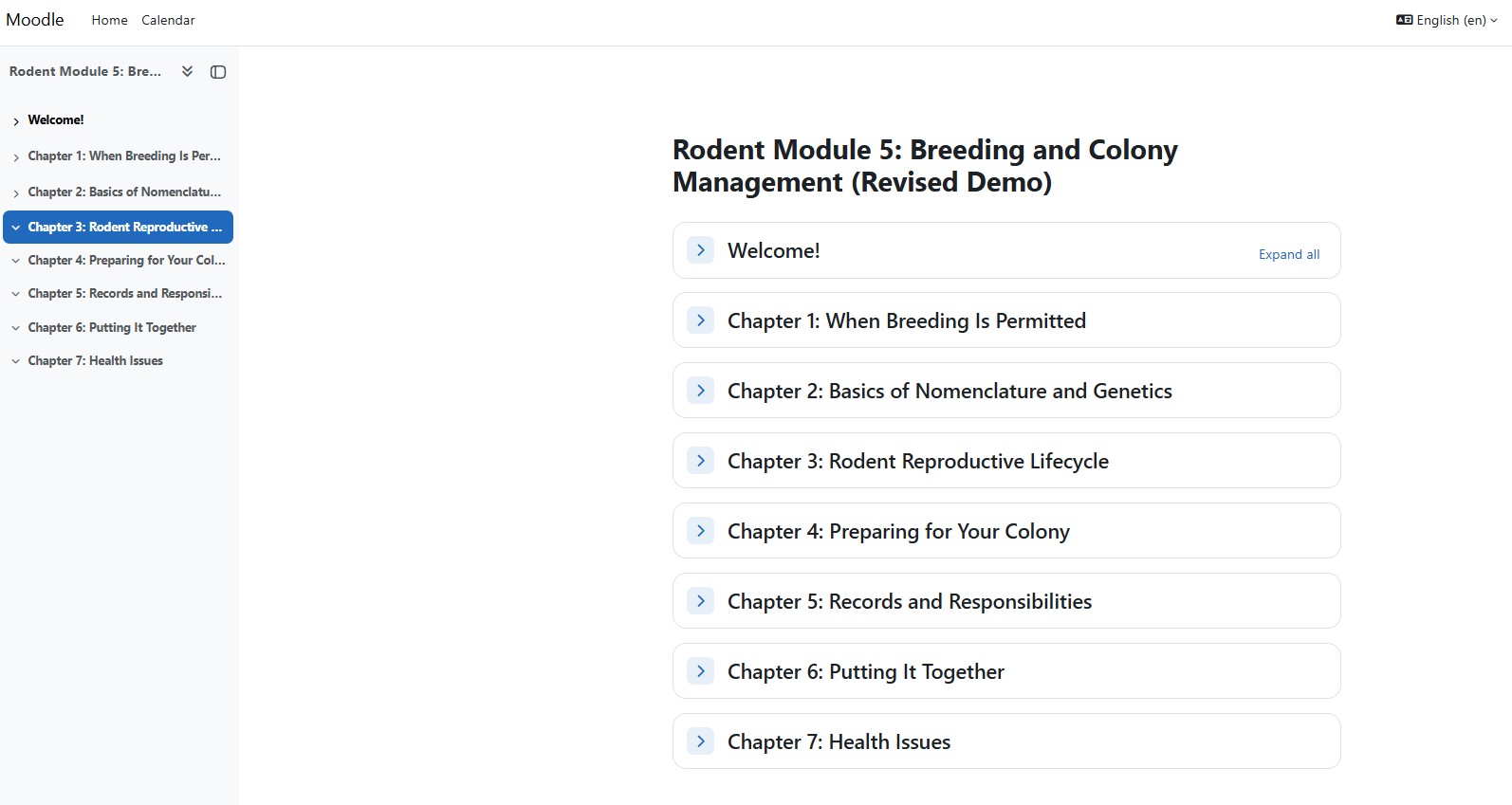
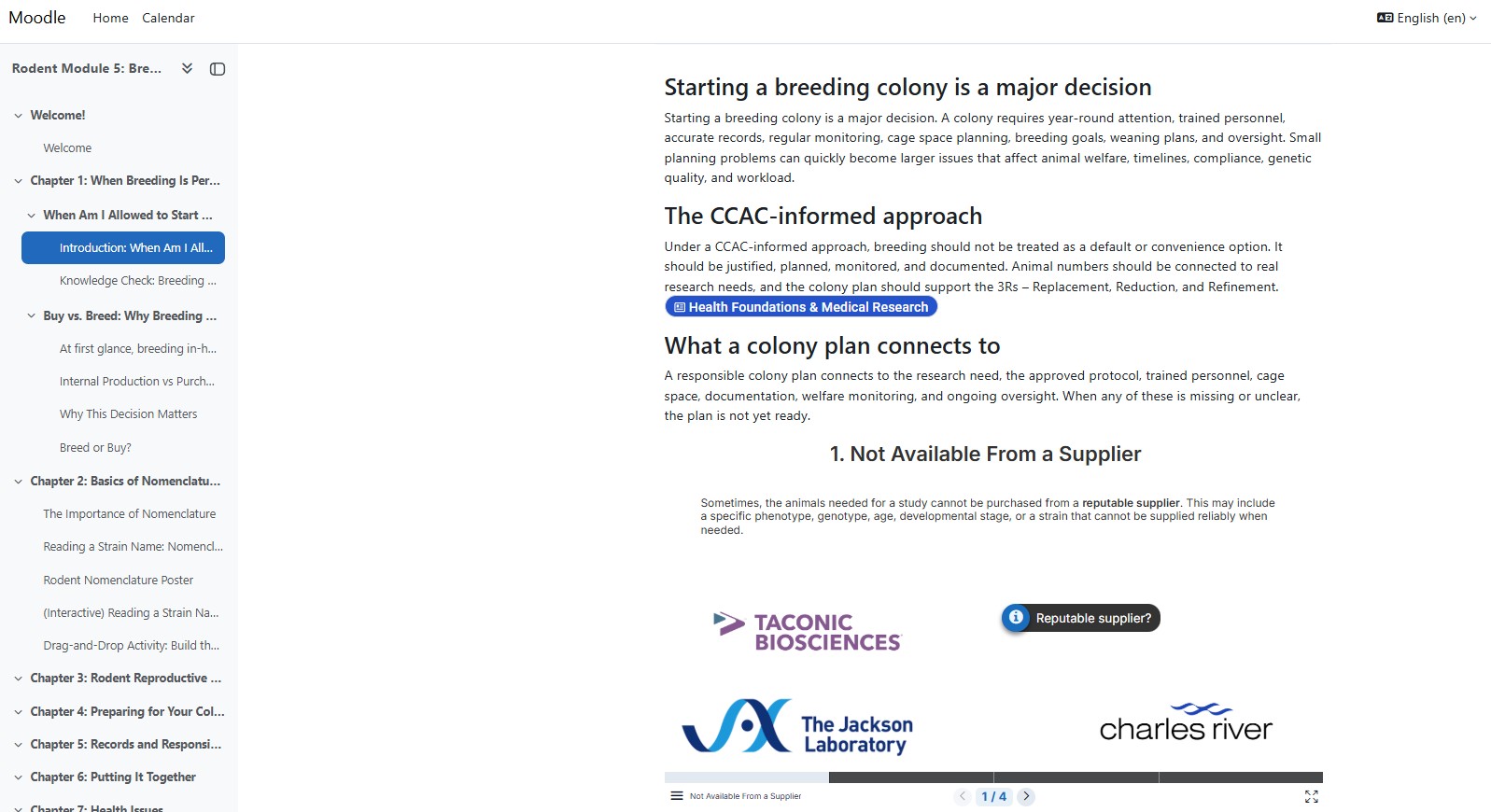
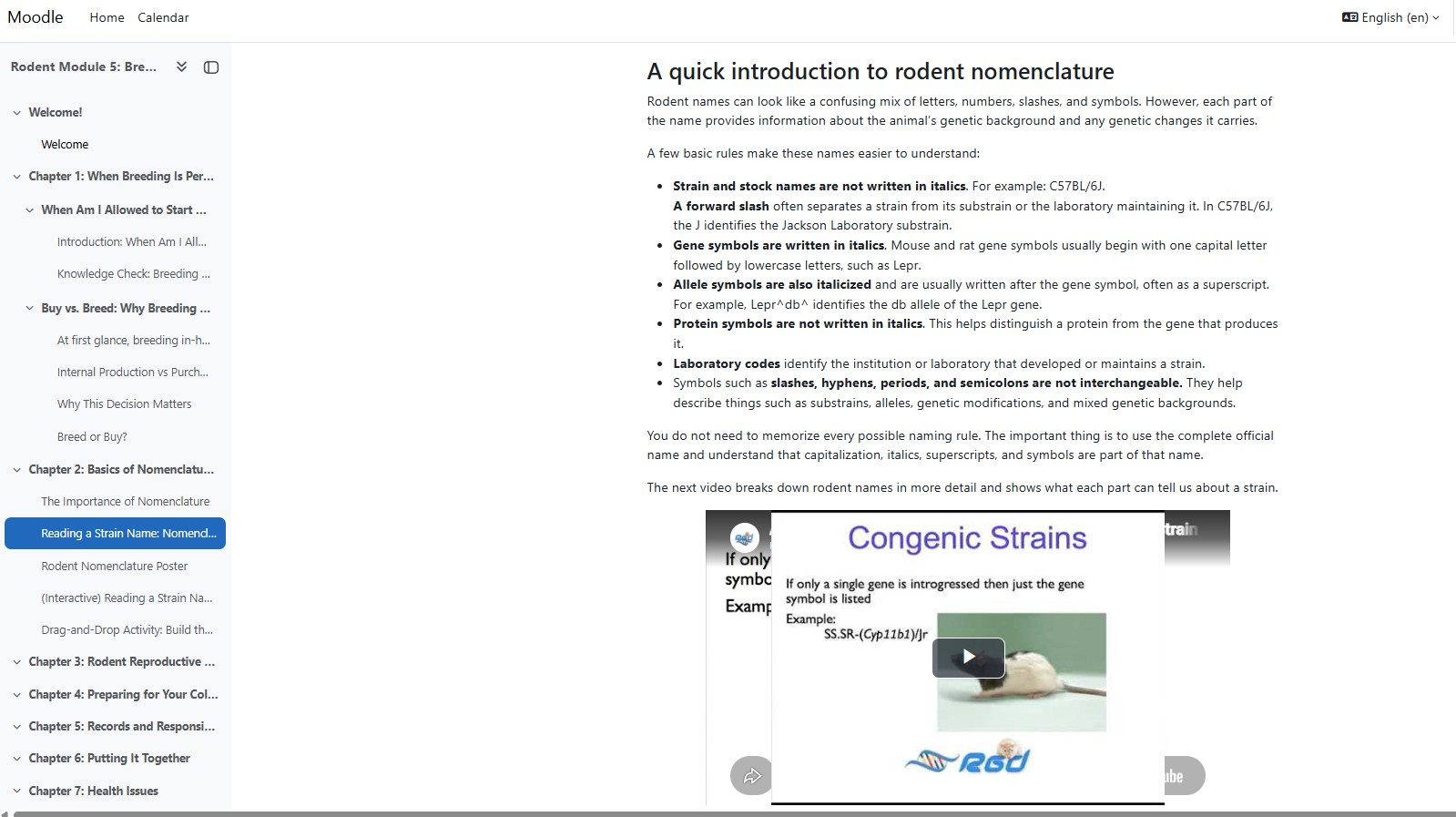
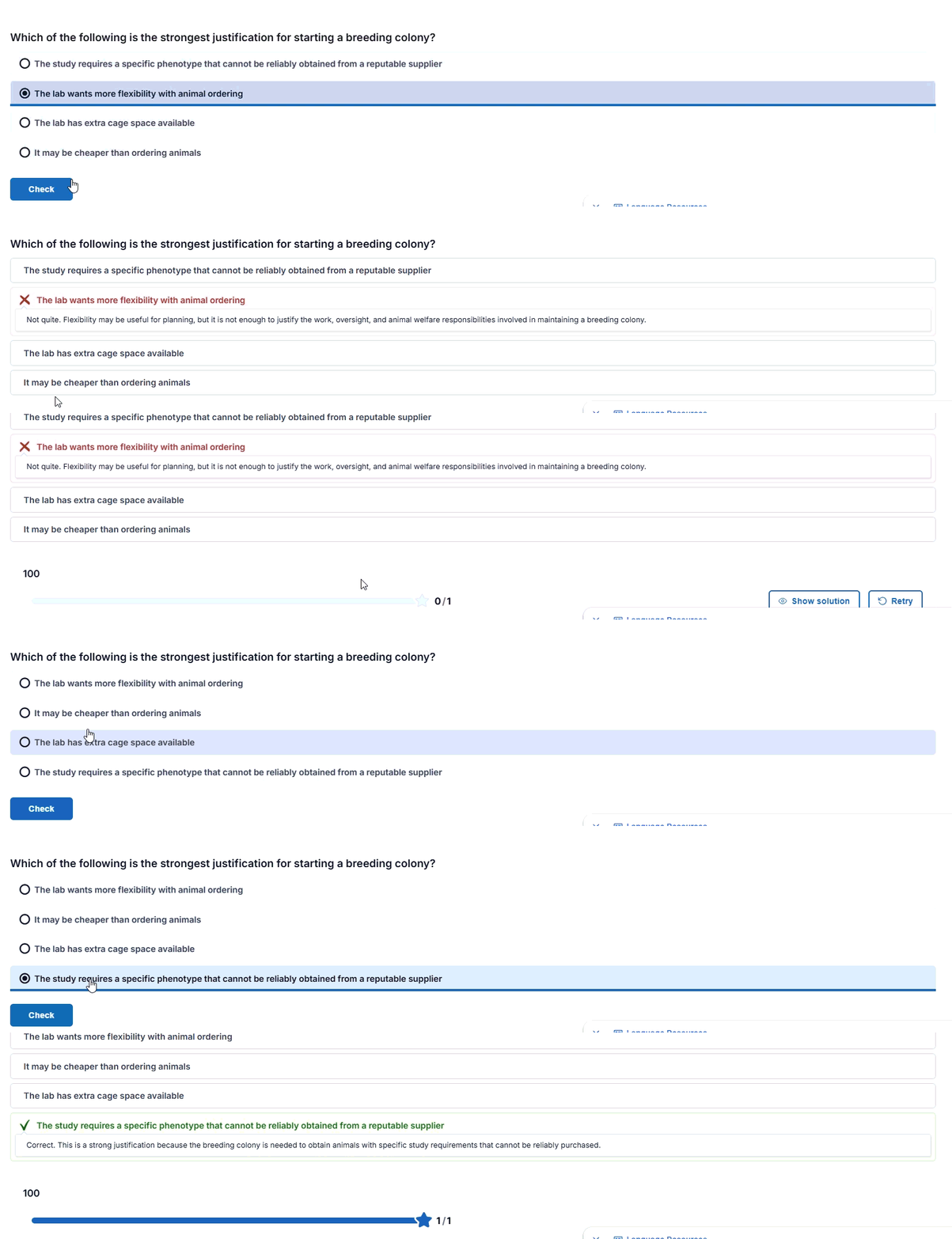
These are screenshots of the real course, not mockups.
Try it yourself
Three activities from the course, running live on this page.
These are not recordings. They are the actual H5P activities from the course, embedded here. Click through them.
Naming-convention hotspot
Reading a technical naming convention one piece at a time.
Branching scenario
A wrong choice plays out its downstream consequence instead of just being marked wrong.
Drag-and-drop check-in
A quick check between chapters, before the next one unlocks.
Results
Designed with ADDIE, evaluated in Kirkpatrick’s terms.
The project followed an ADDIE arc: the analysis phase was literal (attending the session, shadowing the work), and evaluation was planned into the structure rather than added after launch. Reading the outcomes through Kirkpatrick’s levels:
350+ learners since September 2025 with ~85% completion, each confirmed by per-chapter exams rather than a single final; completion now means demonstrated understanding of every section.
The course targets the recurring errors that used to reach staff (planning, procedural combinations, escalation points) with scenario practice tied to each decision. Learners now meet those decisions in the course before they meet them in the workflow.
Training no longer queues behind a monthly session or an expert’s calendar. Coordination that took several hours a month runs in ~20 minutes, and completion records are structured to stand up as training evidence in a regulated environment.
Where this maps
The design problem is the same across regulated sectors.
Compliance-heavy operational training (with SOPs, controlled records, and real consequences for wrong decisions) shows up far beyond one institution. The subject matter here is specific. The pattern is not, and the pattern is what I bring.
- HealthcareProcedures, documentation, escalation, and decisions with patient-facing consequences.
- BiotechControlled workflows, GxP-adjacent records, approvals, and quality expectations.
- ResearchOversight, compliance, planning, and operational readiness under audit.
- Public sectorPolicy-heavy training, correct process use, and defensible documentation.